Educational Series: Wild Animals Need Us to Share the Landscape
By Nick Engelfried
When a wild cougar was spotted in the mid-sized town of Bellingham, WA, earlier this year, it served as a reminder of how vibrant wild animal populations can persist in close proximity to people. However, the news also put many local residents on edge. The young male cougar hadn’t behaved aggressively toward people and showed no sign of being an imminent threat to human life. Still, some neighbors called for the animal’s removal. What happened next was a preventable tragedy.
One day in late February, the cougar exercised its natural hunting instinct by preying on a small dog. The dog’s owners reacted quickly, chasing after the cougar until it dropped the small canine. The pet recovered from the ordeal despite sustaining injuries–but the cougar was not so lucky. Shortly after the attack, the cat was hunted down and killed by state Fish and Wildlife officials. The incident underscores how wild animals who wander into towns and urban areas too often pay the ultimate price for practicing natural behaviors.
As human populations expand and wild areas shrink, people and our pets and livestock are inevitably brought into more frequent contact with wild animals of all sorts. Meanwhile, a growing awareness of the mental health benefits of green space has inspired urban planners to bring neighborhoods and woods into closer contact than ever before. This is beneficial for both people and the recovery of wild landscapes. Yet, while many urban residents value the chance to encounter wildlife close to home, conflicts arise when potentially dangerous animals aren’t given the space they need.
Bellingham’s experience with cougars is typical of how wild animal encounters too frequently play out. The town of over 90,000 people is situated between Washington’s Puget Sound and the forested Chuckanut Mountains. Cougars, coyotes, and even black bears can and do wander into Bellingham’s urban neighborhoods on occasion, often lured by food humans provide either inadvertently or on purpose. It’s a tragedy that after learning to feel safe in urban landscapes, these predators may end up being killed.
Two factors–access to food and habitat–lead wildlife to venture into urban areas. Animals tend to see greenspaces, stream corridors, and even city parks as natural extensions of the forests and woods they call home. Predators as big as bears and cougars may pass through neighborhoods under cover of darkness without most of the human inhabitants even noticing their presence. However, when habitat is combined with food sources that bring predators into contact with people and our domestic animals, the chances of dangerous encounters go up dramatically.
What constitutes food for wild animals will of course vary across different species. Unprotected garbage dumpsters provide a temptation black bears can’t resist, while wolves occasionally prey on livestock when preventive steps aren’t taken. For cougars, urban deer are the attraction that most often brings them into yards and neighborhoods.
Like other wild animals, deer wander into town to utilize the habitat parks and natural areas provide, and they may even learn to graze in urban lawns. Deer pose no danger to people unless they are directly threatened–but co-existing with the predators who follow them requires more thoughtfulness. Deer are the most important food species for wild cougars, who naturally begin to show up where their prey go. One of the best ways to prevent a dangerous situation is to avoid unnecessarily encouraging deer to congregate near human dwellings. This means resisting the urge to feed them.
While offering food to large wild animals is often tempting, it’s almost never a good idea, and it puts both animals and people in danger. Grains, vegetables, and other human foods aren’t part of a deer’s natural diet, and ingesting them can harm their digestive systems. Feeding deer also gives them a reason to linger in gardens, backyards, and other places where their natural predators may soon follow.
A cougar who grows accustomed to hunting deer in urban areas may eventually branch out to pursuing other prey, like pets. Pets left unattended can draw a cougar into backyards, endangering both animals as the predator becomes habituated to the setting. In rare cases, cougars who get used to being around humans can pose a danger to people, especially small children.
Avoiding dangerous wildlife encounters means remembering that while predators like bears and cougars very rarely attack people unprovoked, they are powerful wild animals who deserve our healthy respect. Minimizing food temptations for predators should be a priority. This requires safely and securely disposing of garbage, refusing to feed deer, and making sure pets stay indoors or are closely supervised when a predator may be around. When these precautions are taken and wild animals are given the physical space they need, it’s possible for people and predators to exist in the same space without significant conflict.
Coexistence also means remembering wild animals have a right to share the landscape with us, and changing our behavior to account for their presence. It’s tempting to think cougars, bears, or wolves should be captured and removed from urban or rural landscapes where they pose a potential threat to people and livestock. However, even “humane” capture and release programs rarely work well in practice. A wild animal released hundreds of miles from its home will likely find itself in territory already claimed by another of its species, and will struggle to establish a new territory of its own.
Finally, animals who wander into contact with people are just following their instincts–and if the underlying factors that drew them into urban areas aren’t dealt with, removing them will likely just result in another taking their place. The solution to human-wildlife conflict isn’t lethal removal or capturing predators and releasing them far away. It’s for us as humans to learn to share space with our wild neighbors.
While co-existing with wildlife requires care and caution, the rewards are great for both people and wildlife. Local ecosystems are healthier with predators in the landscape, and there are few things more exciting than encountering a wild animal close to home. Sharing our urban spaces with animals is not only possible, but necessary–and it leads to a world where nature and humans can live together in harmony.
Photo credit: Pixabay
Wait, there’s one more step:
Over 1,734,820 Animal Shelter Meals Donated So Far –
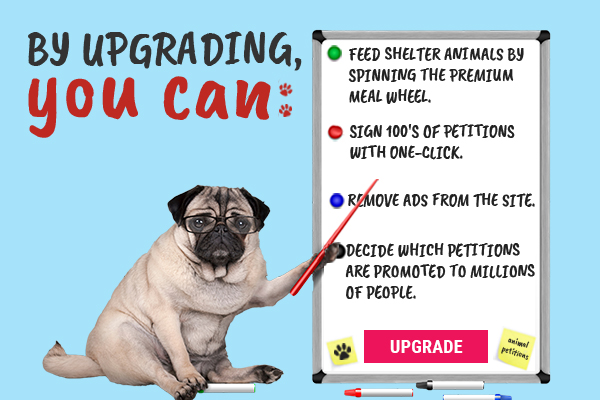
Upgrade to a Premium Membership to get a free No Excuse For Animal Abuse shirt, feed shelter animals with the Educational Series and Meal Wheel, sign 100’s of petitions with one-click, remove ads, and promote your favorite petitions to millions!
7 day money-back guarantee for new members. Zero risk.
Premium Membership comes with the following perks:
• Get a free No Excuse For Animal Abuse shirt.
• Bonus shelter meals donated for as long as you remain a member (no action required).
• Feed shelter animals by spinning the Meal Wheel.
• Sign 100's of petitions with one-click.
• Feed shelter animals with the Educational Series quizzes.
• Remove advertisements.
• Vote on which petitions are promoted to millions of people.
Our Guarantee:
Cancel your subscription for any reason within 7 days and we’ll refund 100% of your money, as long as you’re a first time member.
Frequently Asked Questions:
How are the animal shelter meals donated?
We donate shelter meals through Rescue Bank because they research all shelters, maintain equitable distribution, and track the meals from their facilities all the way to the rescue groups. This ensures that the donation will be utilized in the most efficient and impacting way.
Why don’t we just donate meals without providing any perks like the Meal Wheel?
We’ve been at this since 2008 and have learned that to really make a difference, we need to get people excited and engaged. Our mission is a serious one, but our methods are playful and educational. We’re serious about doing good, but also want to make it fun.
Who are we?
We are a family of sites that works to protect animals, the environment, and more. Our sites include AnimalPetitions.org and ForceChange.com. We’ve been at this for over a decade and are dedicated to protecting and defending animals and the environment. If we can have some fun and improve the world, then we’re accomplishing our goal!

We’ve Been Doing This for Over a Decade and Others Have Taken Notice:

Testimonials:
“Thank you SO much for the premium feature of being able to sign multiple petitions with one click. Many of us go for hours at a time signing each and every petition and crying as we read them. I have often wished for a way to sign my name on every petition because I passionately support them and they all need our voice. This is the best thing – thank you very much!” -Karilyn K., Premium Member“This is just the most amazing wonderful service that makes me so happy! To be able to feed shelter pets is just the greatest feeling. Thanks again for this, and for all you do for the most innocent and helpless among us, the animals. I’m lovestruck.” Sandra Z., Premium Member
“I love the upgrade option and I am so glad I did it.....it enables me to stand with you and many others to fight for the justice these precious souls deserve! We are their voice!!!! And....I adore helping to feed them as well! The spin the wheel game is fun....and I like doing it everyday to help! Keep up the wonderful work....and I know....every click makes a difference!” Dorothy B., Premium Member
“I am so excited to become a Premium Member and to have one-click signing, as I was spending countless hours signing petitions...not that I mind doing it, but my goodness, there sure are a lot of them. I always hope that my signature somehow helps, because these people that abuse/torture animals, need to be put away. As you can tell, that is my passion, I have such a heart for animals, and I want to be their voice.” Darlene R., Premium Member
“Thank you so much! I love being a premium member and spinning that wheel every day, especially when I land on 4 or, best of all, 5 meals. Thank you for all you do, we are all so grateful for you.” Sandy T., Premium Member
“With deepest Aloha, You have no idea how grateful I am for you!” Jan L., Premium Member
“Thank you for the Premium Membership option. I really appreciate that I can sign multiple petitions with one click. It's great! Thank you for the work you do.” Ashley H., Premium Member
“I absolutely love the Educational Series!” Yvonne L., Premium Member
"I am a premium member and religiously sign every petition. THANK YOU for this platform. I also vote for the petition nearest my heart, sometimes voting globally, sometimes I am caught by an individual animal's plight. What gives me great pleasure is noting that almost always, the percentages have no more than a 6-7% spread. It means that, overall, everyone cares about all of the petitions ALMOST EQUALLY! LOL, I also spin that wheel, and when I get 4 or 5 meals, I dance around the room! I have long maintained that what someone does to a helpless animal, they will do to a weaker human if they think that they can get away with it. Those who abuse, no matter how many legs their victims have, should be punished to the fullest extent of the law." Rebecca E., Premium Member
"I LOVE LOVE LOVE my Premium Membership! Everything and anything I can do to help animals and contribute to justice in the world makes me very happy!" Jan L., Premium Member
"Thank you, I love what you do. My friends and I love the membership because we can sign so many more petitions that we may never had heard of. Keep up the good work." Virginia G., Premium Member
Still have questions? Email us: animalpetitions@forcechange.com
Nick Engelfried Writes About Animals, the Environment, and Conservation for the ForceChange network